Other Headlines

The medical community pays tribute to a dedicated crew.
Advocacy groups applaud passage of bill that would permanently repeal and replace SGR.
DOTmed discusses the American Society for Therapeutic Radiation Oncology (ASTRO) program for public awareness with ASTRO's assistant director of communications, Beth Bukata.
A novel microfluidic drug delivery system makes it possible to reach parts of the body poorly served by oral and injectable medications.
The "germ theory" of schizophrenia got a mild boost this week as scientists discover that recently afflicted schizophrenics show higher levels of inflammatory proteins in the brain.

Have News for Us?

Submit your news on the industry, people, or companies.

Forward to a Friend

More News Headlines

Journal of Cardiac Failure Has Published Study Results They validate low-intensity exercise method of testing used with New Shape-HF™ Cardiopulmonary Exercise Testing System.

Philips and BrainLAB Partner Real-time road map for neurosurgeons at the Montreal Children's Hospital.

Medical Imaging Holdings, Inc. Changes Name of Operating Company to Unisyn Medical Technologies, Inc. New name for the combined companies of Barrington Medical Imaging, Sonora Medical Systems, and Echoserve.

Varian Medical Systems to Showcase the Latest X-Ray Image Detectors and X-Ray Tubes at the MEDICA 2009 International Trade Fair The MEDICA 2009 International Trade Fair in Dusseldorf, Germany runs November 18-21, 2009.

Airgas Acquires Tri-Tech Based in Tampa, Florida Adds 16 locations throughout Florida, Georgia, and South Carolina.

Medtronic Receives FDA Warning Letter Following Inspection of Its Mounds View, Minn. Facility FDA noted that the company's promised corrective actions appear to be adequate to resolve the issues raised in the letter.

Carestream Health Signs Contract to Provide Healthcare IT Solutions to MedAssets Customers Carestream Health's Vendor-Neutral Offerings Include Data Archiving, Professional Services, RIS/PACS and New Cardiology PACS.

BRIT Releases WebWorks Browser-based application for viewing patient studies and reports anytime, anywhere.

IMIX Americas Introduces News Slimline DR Detectors Thinner detector rounds out state-of-the-art product line.

New HIMSS Analytics Survey Reveals Healthcare "Business Associates" Unprepared for Data Breach HITECH Act's expanded breach notification requirements will result in more discovery and reporting of incidents.

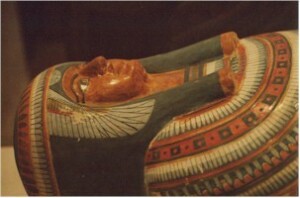
Meresamun

Images Reveal Mummy Not Seen for 3,000 Years

Stunning 3D images reveal a mummy that has been sealed in a coffin for more than 3,000 years thanks to a cutting-edge medical scanner developed by Philips.

The elaborately decorated coffin of the Egyptian woman, Meresamun, who was believed to be a priestess at a temple in Thebes in 800 BC, has remained intact and completely closed as curators at the University of Chicago's Oriental Museum, where she has been for more than 80 years, have been reluctant to examine her further and risk destroying the beautiful decorations.

Now, thanks to the latest in computed tomography (CT) scanning technology, which is used to help diagnose and treat disease, researchers have been able for the first time to show the world remarkable 3D images of a woman who lies preserved inside the beautifully painted casket. Using a Philips 256-slice Brilliance iCT scanner they were able to collect thousands of images from which they have been able to create highly detailed 3D pictures without exposing the fragile remains to the elements.

The technology enabled researchers to "see through" the casket to the mummy, still wrapped in her layers of linen bandages. The scanner is able to "peel" each layer away to reveal her skeleton, including what appear to be stones in her eye sockets, her remaining internal organs and give vital clues about how she lived. Markings on the coffin also suggest other important facts about her life. (Readers can also go to the article,"The Science of Forensics," page 53, January issue of DOTmed Business News for additional information on CT technology and mummy remains.)

The iCT works at very high speeds. In the living this means it can produce a full body scan in under a minute and accurately capture moving organs, including the entire heart in just two beats. This enables clinicians to make a speedy, accurate and comprehensive diagnosis for their patients.

"The pictures are breathtaking," said Michael Vannier, M.D. "cleaner and crisper than anything we had seen before. We can perform detailed analysis of very complex anatomy within seconds."

Interested in Medical Industry News? Subscribe to DOTmed's weekly news email and always be informed. Click here, it takes just 30 seconds.

Please Send us your Comments.

Printable Story
Access and use of this site is subject to the terms and conditions of our LEGAL NOTICE & PRIVACY NOTICE
Property of and Proprietary to DOTmed.com, Inc. Copyright ©2001-2009 DOTmed.com, Inc.
ALL RIGHTS RESERVED