dismiss

Webinar: The Evolution of Equipment Service / Learn More / Register

Other Headlines

Leading job search engine provides notable data.
The American College of Radiology announced it will be among the first to apply for authority to accredit freestanding diagnostic imaging centers as required by new CMS rules.
Future-focused performance management system prepares hospital leaders for the changing health care environment.
Honor bestowed at the 28th International Congress on Applications of Lasers and Electro-Optics (ICALEO®).
Workgroup advises the Office of the National Coordinator for Health IT (ONC).

Have News for Us?

Submit your news on the industry, people, or companies.

Forward to a Friend

More Industry Headlines

ACR Lines Up to Accredit Imaging Centers Under New CMS Rules The American College of Radiology announced it will be among the first to apply for authority to accredit freestanding diagnostic imaging centers as required by new CMS rules.

Swine Flu Resources Get helpful sites and dashboards to track the spread of the disease and access health information and services.

Shock Wave Therapy Helps Bones Mend Broken long bones that aren't healing could be patched up by shock waves.

Freestanding Imaging Centers Slammed by CMS Ruling The announcement of the final rules by CMS, believed to slash imaging reimbursements by 16 percent, could result in mass closings of rural clinics, according to the American College of Radiology.

Analysts See Big Growth in Devices That Make Home Treatments Easier Needle-less, pain-free and home drug delivery devices to show growth in the parenteral market, according to analysts.

Researchers Check Suspicious Looking Mole (Rat) Pint-sized creature proves an interesting riddle.

FTC Extends Enforcement Deadline for Red Flags Rule Enforcement is scheduled to begin June 2010.

Rad Groups Recommend Keeping a Closer Eye on CT Scan Dosage Protocols After Cedars-Sinai Fiasco In the wake of accidental radiation overexposure of hundreds of patients at a Los Angeles hospital, two leading radiologists groups offer guidelines for making sure patients are getting safe scans.

Stereotactic Radiotherapy Halts Lung Cancer in Patients Too Sick for Surgery A recent study presented at this year's ASTRO annual meeting shows that stereotactic body radiation therapy (SBRT) can kill lung cancer tumors and keep them from recurring in medically frail patients ineligible for surgery.

Health Care Reform Round-Up: GOP Releases Health Care Plan; CBO Analyzes House Bill H.R. 3962 estimated to cost $894 billion, reduce budget deficit by $104 billion.

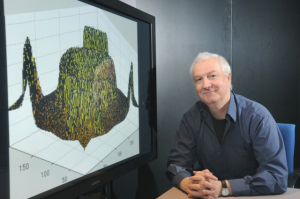
Mark Hereld, computer
scientist at Argonne
National Laboratory

Neural Modeling Breaks New Ground for Treatments in Epilepsy

by Kathy Mahdoubi, Editorial Coordinator
Researchers at Argonne National Laboratory are building state-of-the-art computer models of dynamic neural networks in order to discover what triggers seizures and to find new, more effective epilepsy treatments.

According to the World Health Organization, approximately 50 million people worldwide have epilepsy and 30 percent of epilepsy cases do not respond well to treatment. In addition, the National Society for Epilepsy has recorded more than 40 different epilepsy syndromes, including those caused by congenital defects and neural-tissue trauma. Sudden and periodic seizures are a common symptom of epilepsy.

The neural networks being modeled at Argonne, located just outside of Chicago, IL, will provide a means of mapping the barely understood connections that serve as fertile ground for epileptiform activity - the convulsive electrical discharges that may signal a seizure.

Rick Stevens, Associate Laboratory Director for Computing, Environment and Life Sciences at Argonne, compares neural network models to models of other physical phenomena, including those of earthquakes, and likens epileptiform activity to the foreshocks that precede an earthquake.

Pinpointing what drives epileptiform activity could lead to "significant pharmaceutical outcomes" and broad implications in surgery, and the development of a more accurate treatment device, worn or implanted, which acts as a "brain pacemaker." Such devices already exist and monitor anomalous brain activity, but the trick is finding out how to "budge it back to a normal state," says Stevens.

One the most challenging aspects of the project is finding out how complex and numbered the neural connections should be in order to impart noteworthy results. Computer scientist Mark Hereld is one of the researchers working with Stevens to determine the optimal scale and computational level of each model used in their epilepsy simulations.

Argonne employs a network of super computers, dubbed JAZZ, which includes 380 individual server machines. Also on the premises is IBM's Blue Gene/P, which has 160,000 processors and is one of the most advanced super computers in the field.

The human brain is thought to contain at least 100 billion neurons. Test models at Argonne are capable of replicating about a half-million brain cells, but scientific results are better using 10,000.

"We take our simulations and we cut it up into little pieces within the network," says Hereld. "The pieces are 2-D, like a piece of paper, and they replicate a slice of your brain. The separate computers across the network are then synchronized."

The precision and versatility of modeling far exceeds methods used by other disciplines to document brain activity, like electroencephalography (EEG), which tracks brainwaves but provides "a funky average," and high-resolution microscopy, which focuses on too finite of an area, Hereld says.

Hereld also works in tandem with Wim van Drongelen, who leads the partner research at the University of Chicago Hospitals' epilepsy center. It's here that they try to recreate the simulated findings with resected tissues and the various excitatory and inhibitory biochemical agents that trigger and propagate seizures, particularly those in pediatric patients.

"The folks in the lab as well as the clinic have an array of these constituents they can work with," says Hereld.

The project is already testing conventional wisdom. It is a commonly held theory that seizures are brought on by a high level of activity in the brain, but the research at Argonne points toward the opposite. Epileptiform activity is shown to be more associated with low levels or "strength" of biochemical agents.

"At each of our stopping points we observed the behavior and discovered somewhat surprising results by turning down the strength," says Hereld.

Funding for the project comes from U.S. Department of Energy and the National Science Foundation. Other neural modeling projects include IBM's Blue Brain Project in Lausanne, Switzerland and a joint venture into artificial brains at IBM's Almaden Research Center in San Jose, CA.

Chartered in 1946, the Argonne National Laboratory was named the country's first national laboratory. It is currently one of the U.S. Department of Energy's largest research centers.

Interested in Medical Industry News? Subscribe to DOTmed's weekly news email and always be informed. Click here, it takes just 30 seconds.

Please Send us your Comments.

Printable Story
Access and use of this site is subject to the terms and conditions of our LEGAL NOTICE & PRIVACY NOTICE
Property of and Proprietary to DOTmed.com, Inc. Copyright ©2001-2009 DOTmed.com, Inc.
ALL RIGHTS RESERVED