This report originally appeared in the June 2009 issue of DOTmed Business News
America is an aging population - a majority of Baby Boomers (75%) are slated to retire in the next decade. To cut down on health care costs, many seek to age in place - by staying in their current homes - with some useful alterations incorporated.
Upgrades to a home are usually a good idea when deciding to maintain independence. Interior designers knowledgeable in Universal Design will be aware of the challenges that people face as they get older. Therefore, designers will usually design bathrooms with reinforced walls so that grab-bars can be installed, along with low or no-threshold showers, which will cut down on slips and falls by helping users keep their feet close to the ground. Entranceways might also be widened to accommodate wheelchair or walker usage and lighting may be increased to assist those with weaker vision. However, all the design elements in the world won't solve the problem of living alone if there are more serious problems than just aging - that's where homecare and rehab equipment comes in.
In the next 30 years, the U.S. population aged 65 and over will double to 70 million. About 80% of those over age 60 prefer to live independently. The most common medical conditions requiring home care are diabetes, heart disease, and cerebral vascular disease.
While numbers vary depending on sources, even the lower estimates put the number of Americans with an acute illness, a long-term medical condition, a permanent disability, or a terminal illness, at 8 million individuals. That number is well above the past projections by many top medical experts.
About 71% of the home health care patient population is over age 65 (approximately 955,200), as per the 2000 Census on Home Health Care Patients. The majority of this age group lives in the Northeast (73.6%) and the South (69.8%), with the Midwest (69.2%) and the West (65.7%) following close behind. There are a total of 1,355,300 home health care patients in all age groups, with 29.5% (400,100) under age 65.
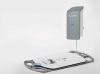
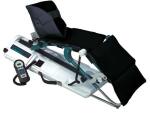
KLC Flex-Mate K500
Knee CPM
Of these patients, 41.4% use sensory/dental aids (e.g., eyeglasses or contact lenses, hearing aids, dentures); 62.2% use mobility aids (e.g., canes, crutches, orthotic braces, walkers, wheelchairs); 43.4% use self-care devices (e.g., bedside commodes, elevated toilets seats, grab-bars, hospital beds, special mattresses, over bed tables, bath benches); and 23.4% use medical devices (e.g., blood glucose monitors, enteral feeding tubes, intravenous and other respiratory therapies, and oxygen tanks/treatments).
There is overlap in these medical device usage percentages reported in the 2000 Home Healthcare Census - however, this data is nearly 10 years old: by now, each age group has moved into the next age bracket.
As life expectancy continues to rise, there will be an increase in this aged and aging population. Home care and rehabilitation equipment companies have been responding to these demographic trends but have found it difficult to break-even in a contracting economy, with declining reimbursements, deferred purchase orders, and decreased customer demand.
Small ISOs selling used home care equipment, such as Pro Select Services in Wyoming, MN, are feeling the pinch, even though sales have been steady. Pro Select Services services stress equipment in the chiropractic and physical/occupational therapy markets.
"I have had some hospitals freeze purchases due to the slowdown, but I believe it was an administrative tactic to delay major purchases. I have also had some independent physical therapists and chiropractors delay purchases for a month or two," said Michael Zanish, President of Pro Select Services. "In the first half of 2009, we have seen a steady rise and expansion of the medical sector. The overall need for therapy appears to be increasing as is chiropractic care."
In particular, insurance companies have been cutting into his business - by "reducing reimbursement for certain therapies and eliminating reimbursements for others entirely. The smaller the health care provider, the smaller the distributed reimbursement."
The demand for Home health
care is increasing rapidly
due to the growing size
of the older population
Yet Zanish remains optimistic about the future of the home care equipment industry: "despite the general economic recession, I believe the economy will continue to expand. Our elderly population percentage is rising faster than ever and technology seems to be getting better." Medicare and Medicaid are the largest paying sources for home health care agencies. However, Medicare reimbursements have fluctuated, from high points (1967-1985, 1992-1996) to low points (1985-1990, 2000's). Medicaid payments have followed a similar trend, with both Medicaid and Medicare reimbursing approximately 25% - 30% of the total home healthcare costs. Other sources that fund home healthcare costs include out-of-pocket expenses (20.5%), private insurance (12.2%), and nonprofit organizations (1.4%).
Others cite high transportation costs as negative influences on the home care equipment industry.
"The rising cost of transportation directly impacts the cost for the end user," said Reuven Kohn, President and CEO of All Time Medical. Located in Monsey, NY, All Time Medical is an ISO selling new home care equipment and has been in business for about four years.
Also, "Competitors that know nothing about the products and that do not provide the customer service and care that we do . . . undercut the industry," stated Mr. Kohn.
OEM's such as KLC Services, Inc. in Hilliard, OH, concur with Mr. Kohn's assessment.
Competitive bidding of purchases for servicing and equipment sales have put a damper on industry growth, "even though I'm not directly affected," said Mark Reep, President of KLC Services, Inc. KLC Services sells new and refurbished equipments, particularly Continuous Passive Motion (CPM) devices. It is also a full-service and repair company that sells replacement parts and soft goods for the FlexMate brand of CPM devices.
There has been an increased "hesitancy from dealers, hospitals, rehab facilities, and associated groups with regard to inventory and purchasing needs," he observed.
But he also remains upbeat in his industry forecast: "I see a gradual pick up as the economic conditions seem to ease. I still feel there are good opportunities in the health care industry. This will require businesses to be more creative in their business practices and approaches. Keeping up-to-date with all aspects of what makes a particular business or industry operate will be crucial."
Sometimes being up-to-date means keeping abreast with new technologies in the field.
"In the technology age, our challenge is the technology. 'Expertise' can quickly become obsolete and this affects our customers," said Roger Nasiff, President of Nasiff Associates, Inc., a manufacturer of stress test equipment, in Central Square, NY.
Because of the more expensive technology, "replacements and /or upgrades can become very costly," he noted. The service required to upkeep the home care equipment industry is labor intensive and expensive, requiring an educated and trained workforce to maintain the equipment.
Cost-effectiveness is key in the home care equipment industry, especially since most consumers choose home care to cut down on health care costs, not to increase expenses.
Home-based primary care serves to reduce health care costs by decreasing the overhead, personnel and equipment expenses from the hospital. In one independence-at-home (IAH) statistic, the cost of 10 house calls is offset by one prevented ER visit (at $1,500 per ER visit). The IAH Act is a bill proposed by home care organizations supporting the physician house call model of care.
Overall, the larger OEMs and ISOs may benefit from economies of scale in sales and marketing, while the smaller companies may profit by serving local markets. Annually, the home care industry generates total revenue of $55 billion, with the top 50 companies by size holding less than 25% of the market share. For the top 10% of companies, the 2007 average revenue was $17,340,702, up 30.1% from 2004.
As to whether the home care equipment industry's "glass" is half-full or half-empty, it all depends on who you talk to. For some, the outlook is positive, with a large retired population creating the bulk of the demand for the industry. For others, downward pressure on profits from declining insurance reimbursements, competitive bidding, and constantly changing medical device technology, chip away at the industry's expected growth.
Looming over all this is one major problem - recent reports have adjusted a previous estimate on Social Security funds as well as Medicare hospital insurance funds. Social Security is now forecasted to run out of funds four years earlier than previously forecast, facing an insolvency by 2037, while the Medicare hospital insurance trust fund now estimates 2017 as the dry-up date rather than the previously estimated 2019. Analysts do point out that income will continue to go into Social Security from payrolls, so benefits will still be available, but they would likely be less than full benefits. That quandary just means even with technology and home care potential improving, it may become more difficult to age in America if no one can pay for it.
Regardless of what the future holds, it pays to try to be prepared. Although many individuals will never need home health care equipment, everyone can benefit from upgrades to their homes to help usher in healthy and happy golden years.
DOTmed Registered Homecare/Rehab Equipment Sales & Service Companies
Names in boldface are Premium Listings.
Domestic
Ken Johnston, Delta Technology, Inc., GA
Dominick McCann, Mobile Medical Maintenance, IN
Bob Gaw, PRN, MA
DOTmed Certified/100
John Gladstein, Medical Device Depot, MD
Asif Bhinder, tekyard, MN
Michael Zanish, Pro Select Services, MN
Jason Eden, Bio Basics Global, MO
DOTmed Certified
Joseph Sciarra, Marquis Medical, NJ
DOTmed Certified
Roger Nasiff, Nasiff Associates, Inc., NY
Reuven Kohn, All Time Medical, NY
DOTmed Certified
Don Bogutski, Diagnostix Plus, Inc., NY
DOTmed Certified/100
Mark Reep, KLC Services, Inc., OH
Kristin Anderson, TRC, OH
Juan Sandoval, Monterrey Medical Equipment, TX
Louie Finco, CPM Sales & Service, Inc., WI
International
Jorge Martinez, Mafe Medical Service, Mexico